

Introduction
Loft boarding is one of the most popular home upgrades in the UK. It adds valuable storage space without the cost of a full conversion.
But it’s also one of the most misunderstood.
Can you board directly onto joists? Will it affect insulation? Is it safe? Will it invalidate your warranty?
This guide answers the most common loft boarding questions properly.
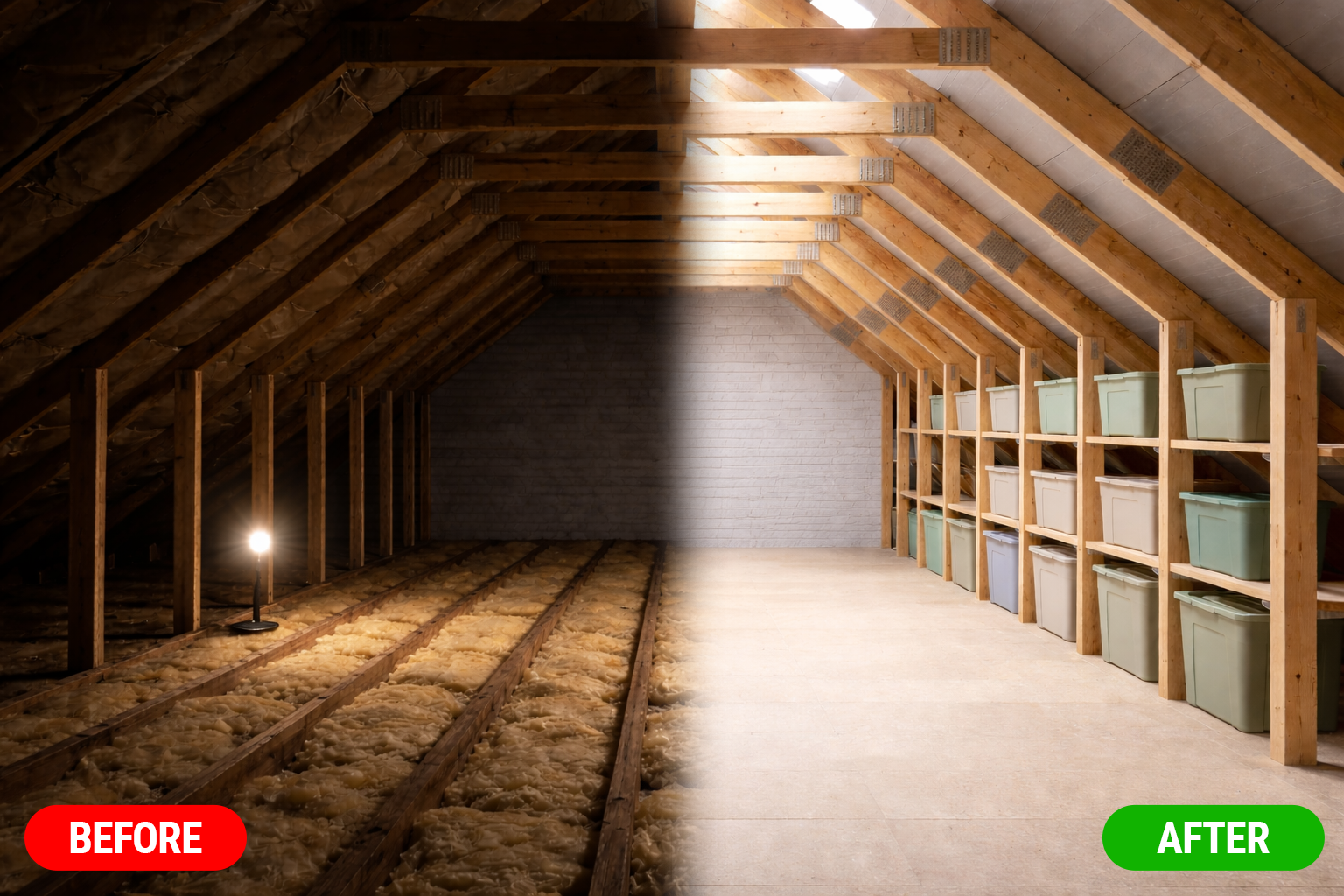
What Is Loft Boarding?
Loft boarding involves installing raised panels across your loft floor to create a safe storage platform.
Modern systems raise boards above insulation to:
- Maintain airflow
- Prevent insulation compression
- Protect ceiling structure
It is not the same as a loft conversion, and is intended for light storage only.
Is Loft Boarding Safe?
It can be, if done correctly.
Most modern homes are built with ceiling joists designed to:
- Hold plasterboard
- Support insulation
- Carry minimal additional weight
They are not designed for heavy storage unless reinforced.
A professional installer will:
- Assess joist depth and spacing
- Install raised boarding systems
- Avoid compressing insulation
- Maintain ventilation pathways
Improper boarding can lead to:
- Cracked ceilings
- Sagging plasterboard
- Damp and condensation
- Structural strain
Will Loft Boarding Affect Insulation?
Yes, if installed incorrectly.
Current building regulations require 270mm of insulation depth in most properties.
If boards are laid directly onto joists:
- Insulation gets compressed
- Thermal performance drops
- Energy bills increase
- Condensation risk rises
Raised loft boarding systems prevent this by lifting the deck above insulation level.
Can I Board My Loft Myself?
Technically yes, but there are risks:
- Blocking ventilation
- Damaging wiring
- Compressing insulation
- Overloading joists
- Creating fire hazards
DIY boarding is one of the most common causes of loft condensation issues.
How Much Weight Can a Boarded Loft Hold?
Standard ceiling joists are not designed for:
- Gym equipment
- Furniture
- Water tanks
- Heavy archived storage
Loft boarding is suitable for:
- Suitcases
- Decorations
- Light boxes
- Seasonal storage
For heavier loads, structural reinforcement is required.
Do I Need Building Regulations Approval?
Basic loft boarding for light storage does not usually require approval.
However, if:
- Structural reinforcement is added
- You’re converting for habitable use
- You alter fire escape routes
Building control approval may be necessary.
Will Loft Boarding Add Value?
While not officially classed as extra living space, organised loft storage can:
- Improve buyer appeal
- Reduce clutter
- Increase usable home space
Conclusion
Loft boarding is a smart upgrade, but only when done correctly.
Protect your:
- Insulation performance
- Structural integrity
- Ventilation pathways
Professional installation ensures long-term safety and efficiency.